
Savoring February 2026
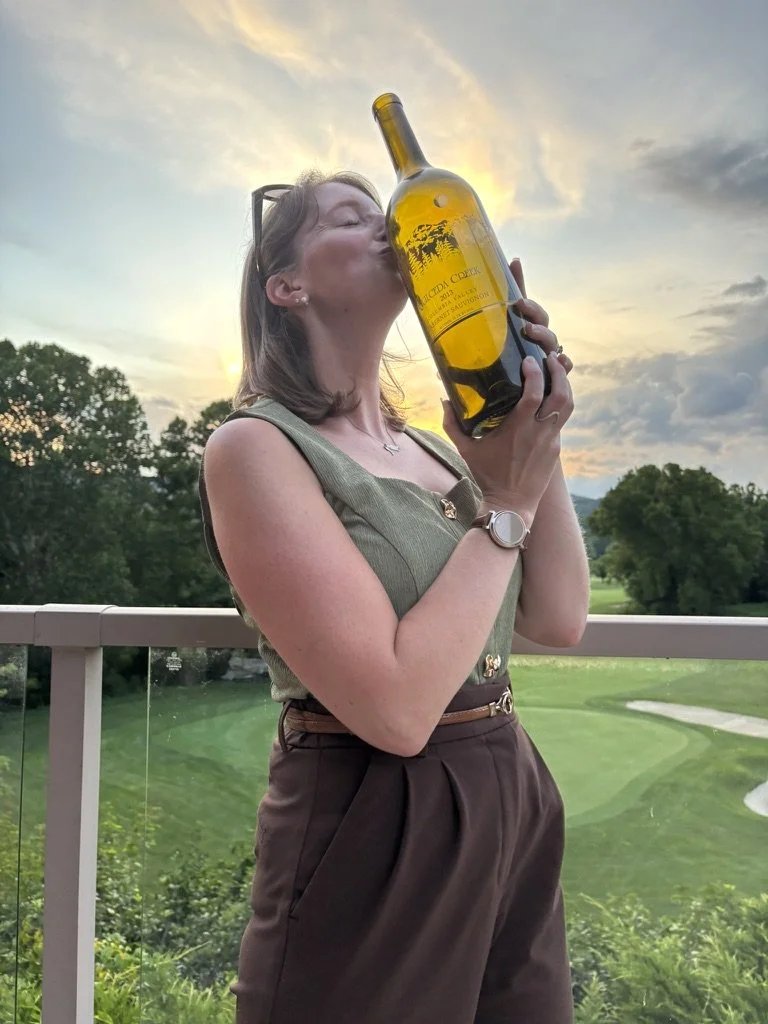
Last month was filled with discoveries we savored, enjoyed and appreciated. Here is what stuck with me, what we drank, ate, and learned along the way.
Wines We Discovered:
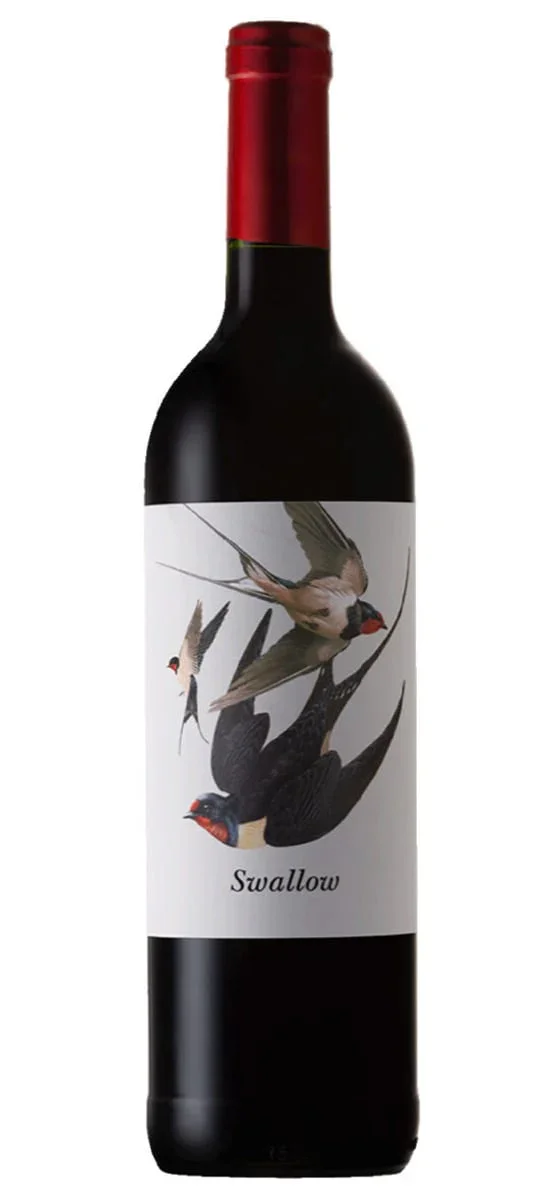
Natte Valleij Swallow Red Blend 2023 Coastal Region, South Africa
Swallow Red Blend
Katie (owner of Blacksburg Wine Lab) and I have recently become a little obsessed with birds, Katie especially. We even joined the NRV Bird Club (highly recommend if you share a love for these winged creatures). So when we came across this label, we immediately fell in love, not just with the artwork, but with the terroir-driven wine inside. We knew both oenophiles and ornithophiles alike would appreciate this bottle.
Natte Valleji Winery
Named after the pearl-breasted swallows that return each year to nest in the cellar at Natte Valleij in South Africa’s Coastal Region, this wine is a blend of 76% Syrah, 17% Cinsault, and 7% Chenin Blanc. The inclusion of a white grape is a thoughtful nod to Rhône traditions, where a touch of Viognier is often co-fermented with Syrah, though here, Chenin Blanc (one of South Africa’s most widely planted grapes) brings its own unique lift. Winemaker Alex Milner considers this an R&D wine, with the cépage shifting each vintage.
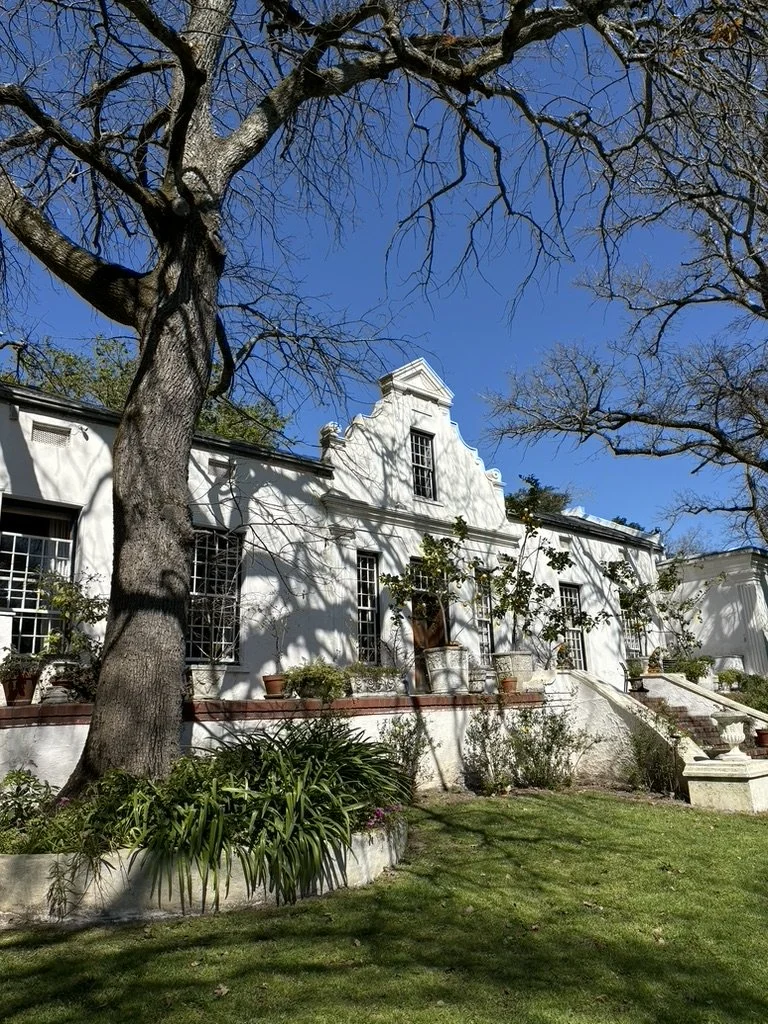
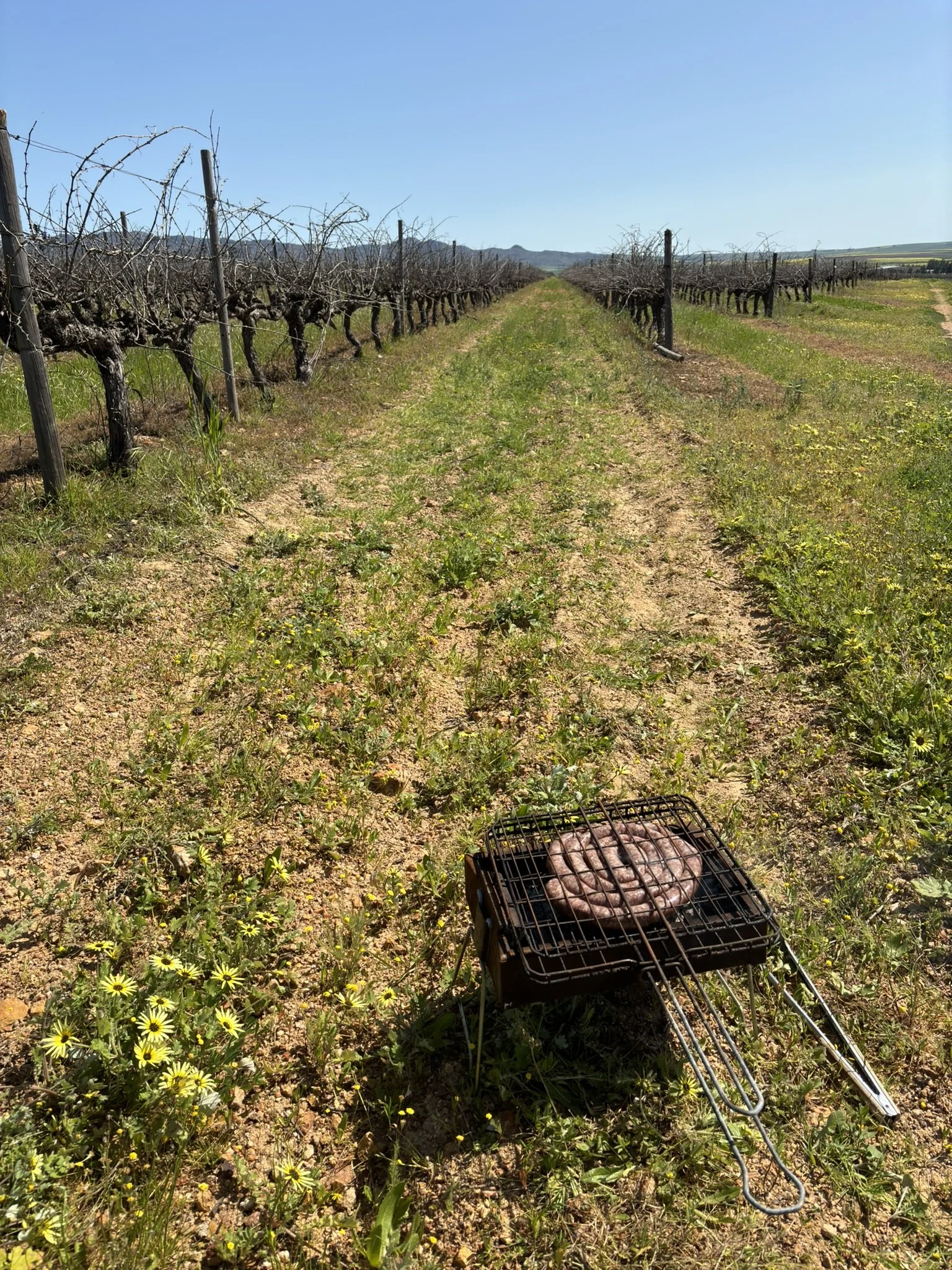
This winery holds a special place for me personally. I had the opportunity to visit Natte Valleij, where Alex braai’d (an Afrikaans term word for barbecue or grill) for us right in the middle of the vineyard, an unforgettable experience that made this wine even more meaningful.
After 18 months in French oak, the wine is approachable, showing red cherry and raspberry with a medium, gently structured tannin profile. When I tasted a previous vintage on-site, I noted pickling spice, blackberry, hints of smoke, and leather, wildly different from this expression. That variation is part of what makes this
Paarl Cinsault vineyard site, Natte Valleij
wine so compelling. It’s a true snapshot of time, place, weather, and the winemaker’s evolving decisions.
I’m especially excited to share this bottle in the spring, it’s the kind of wine that invites curiosity, conversation, and maybe a little birdwatching.
Domaine de L’Olivette Cuvée Mare Nostrum Rosé Mediterranee, France 2025
This winery has been in the same family for over 200 years. Located in Bandol, France, and is labeled as an IGP, which translates to Indication Géographique Protégée (Protected Geographical Indication). An IGP designation allows the winemaker more freedom for creative expression in the winery without the restrictions of the Bandol appellation laws.
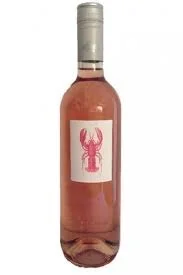
Made from a blend of Grenache, Cinsault, and Mourvèdre, this wine is delicious. I like to think I don’t judge a wine by its label, but this one happens to have an adorable one. In a case of twelve, there are three different labels, all featuring sea creatures.
The biggest wow factor of this wine for me, though, was the texture. It has such a silky, soft mouthfeel, along with notes of watermelon rind and crushed raspberries infused in water. A must try this spring and summer.
We pre-ordered this baby, and it will be available next month.
What We Read for Book Club: The Champagne Letters by Kate Macintosh
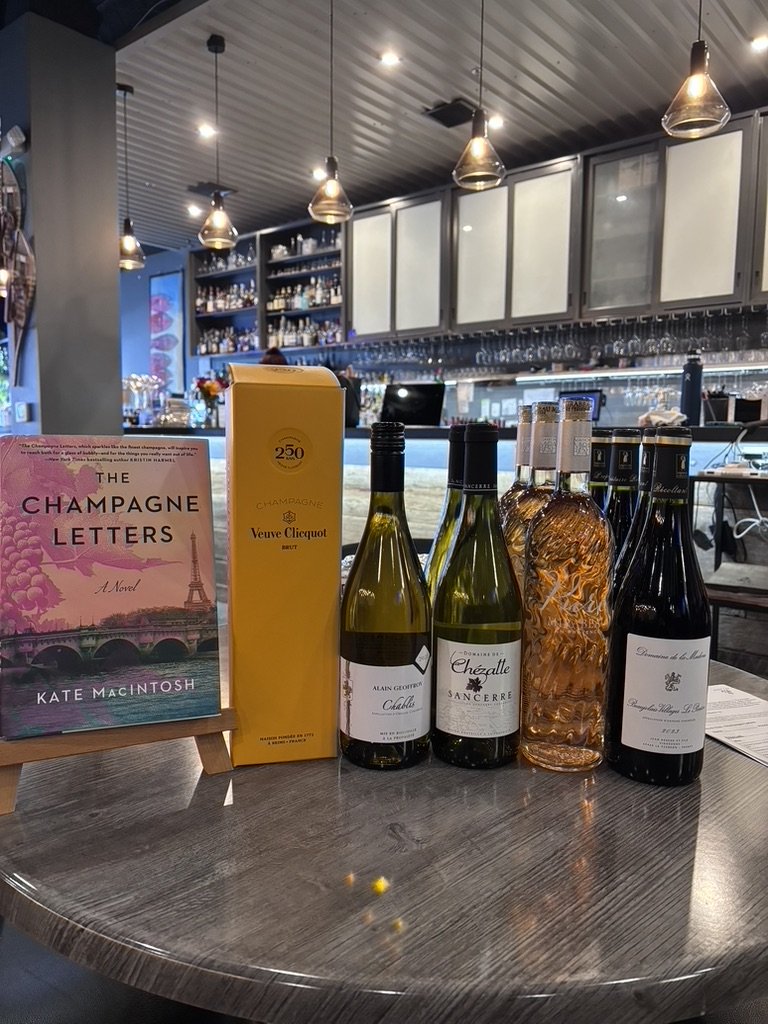
After reading the first chapter, I was a little disheartened to find another wine book centered around the theme of a divorcee leaving for an exciting new exotic country. I found myself wondering where the stories are about the happy couple who travel abroad together and discover a wine mystery to solve. It seems like wine reads are saturated with this type of storyline.
Of course, I have nothing against divorced couples and I am extremely empathetic to the situation, I just wanted to read a story with a happy couple. Is that too much to ask?
But as I continued reading, I was pleasantly surprised by the storyline and how it all unfolded. I didn’t even see the twist coming! Although many of the book club members did… I’m not sure what that says about me.
Overall, I enjoyed the book and would recommend it if you like stories about wine, mysteries, and Champagne. Speaking of Champagne, we did share a bottle or two of Veuve Clicquot while discussing the book, which everything is better with Champagne.
I really loved how the author switched timelines between the main character and the widow. It’s a fun, entertaining, and quick read. It definitely makes you want to enjoy a glass of Champagne while reading, and it must be the Widow’s!
Veuve Clicquot Yellow Label Champagne has such a distinct flavor profile with its lingering hints of brioche and French toast. It’s so elegant, oh! and the bubble structure! Did you know that as Champagne ages, the bubbles become smaller and finer?
Wine Lab does have one bottle of Veuve Clicquot Vintage Champagne. Anyone want to go in on that?
What we are Eating
Did you know that Wine Lab offers candles in our desserts for your birthday celebration?
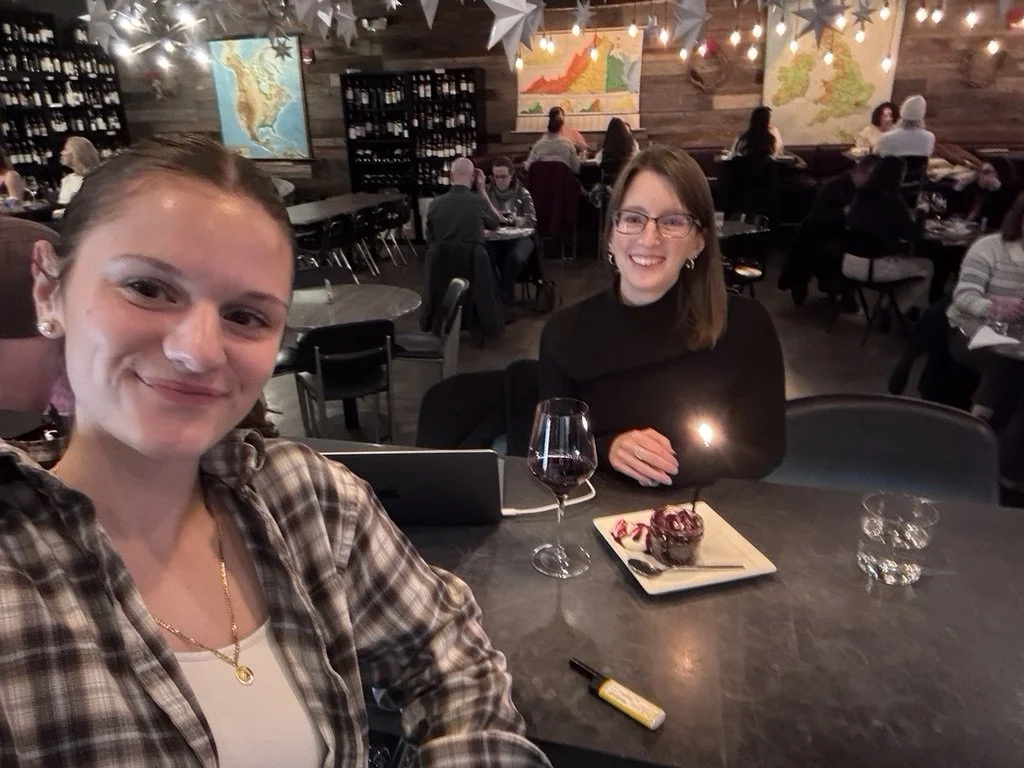
It was so sweet of Katie Lowe, one of our servers, to coordinate this special moment for my birthday. The flourless chocolate cake is incredibly chocolatey and decadent, you may want to order a second one, and honestly, many people do. It’s also a fantastic option because it’s gluten-free, making it a great choice for those with celiac.
Think warm, gooey chocolate on the inside with a rich chocolate cake exterior.
Try pairing this cake with a dessert wine. Typically, sweet desserts with sweet wine works best. A ruby Port, like Graham’s Six Grapes, would really round out this dessert. Try it with the Dessert flight!
What We Learned: Staff Training on Aprés Ski/Alpine Wine & Brandy
Alpine Wine
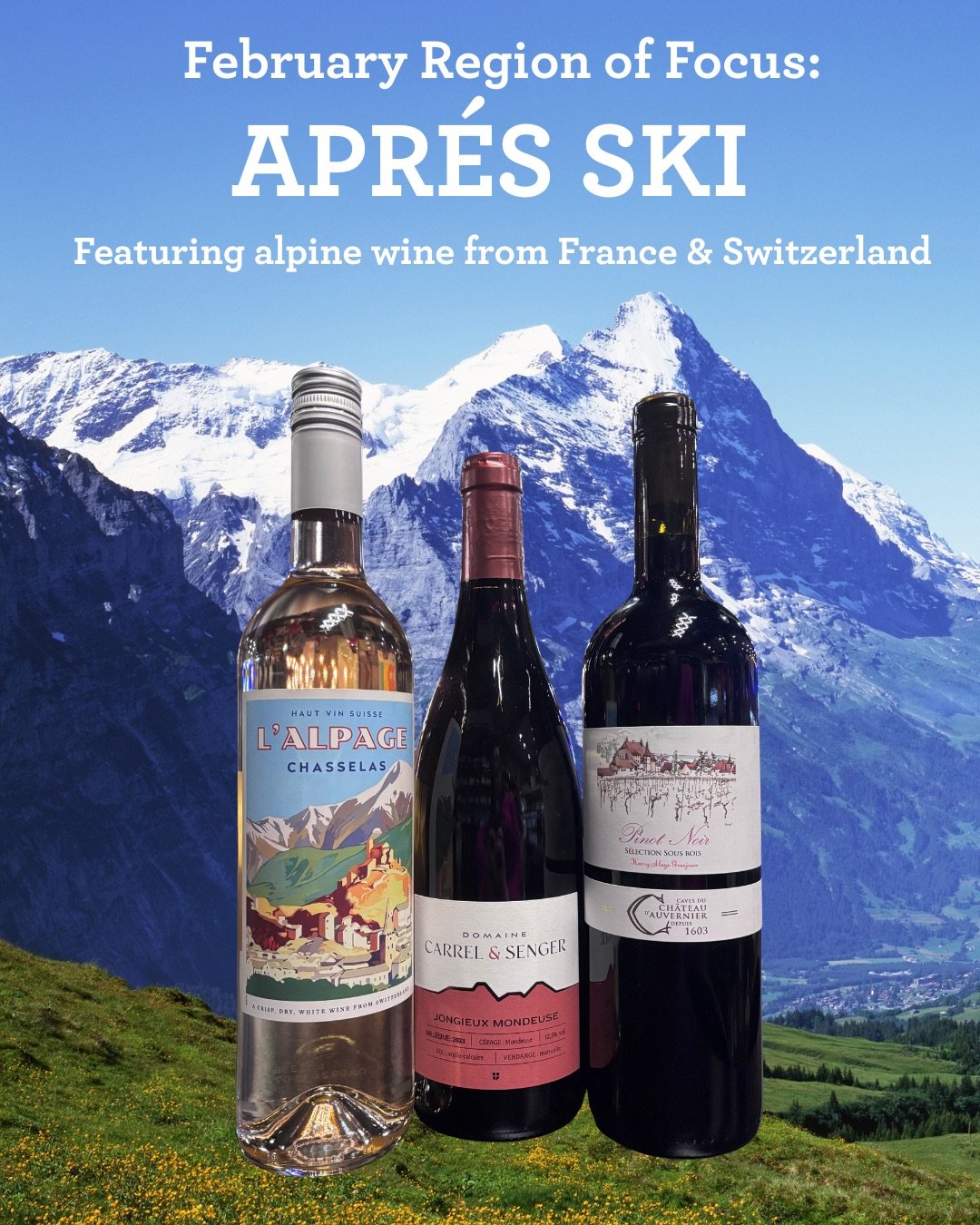
Although I’ve never been skiing, I can absolutely appreciate the culture of après-ski, which translates to “after ski”where, after a day spent enjoying snowy slopes, people gather indoors to sit by the fire and indulge in good conversation, wine, great food, and maybe a hot drink. It’s a time when the day’s events are recounted and conversations deepen, strengthening connections with friends as they sip on delicious, high-elevation alpine wines.
One of our favorites, both for the staff and our guests, was a wine called L’Alpage Chasselas (pronounced “shasselas”), imported by Eric Solomon. The wine originates from the Lake Geneva area, and the name “L’Alpage” refers to the high alpine pastures where Swiss cows graze. Does the Sound of Music come to mind yet?
We also featured a sparkling rosé and a light-bodied red, Mondeuse, from Carrel & Senger in Savoie, France. All of these wines really piqued my interest because I’m always looking for something a little different. Yes, Cabernet and the “gimme” grapes like Chardonnay are delicious, but let’s expand our palates and try something new.
Let me tell you, we were not disappointed. There was plenty of savoring, eating, and enjoying at the Wine Lab over the course of the month.
On Brandy
John O., our Bar Manager, put together an educational presentation on brandy for our staff. For those who may not be familiar, brandy is a spirit typically distilled from wine (grapes) and aged in oak barrels. While it has strong historical roots in France, it’s now produced all over the world.
I even had the pleasure of trying some South African brandy while visiting there a few years back.
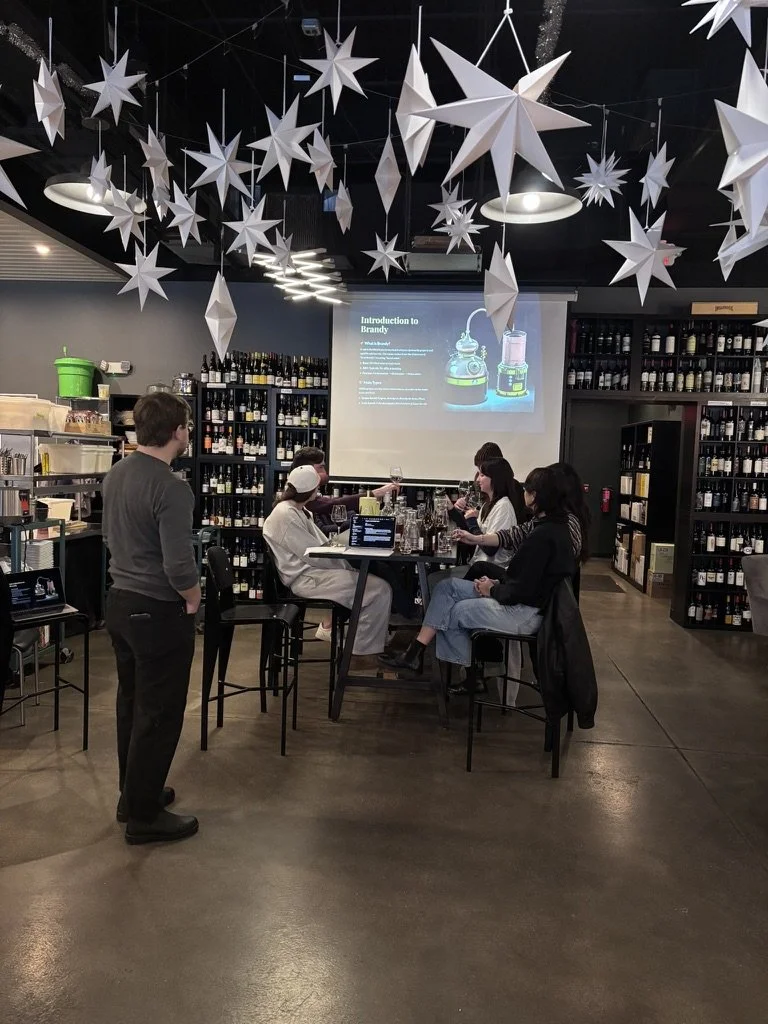
Personally, brandy has always been somewhat familiar to me. One of my favorite cocktails featuring brandy is the Metropolitan, a 19th-century classic made with sweet vermouth, a variation on the Manhattan. I’ll leave the recipe below in case you want to recreate it yourself.
Did you know that Armagnac and Cognac are both types of brandy? They’re simply named after the regions they come from and have specific production regulations. There are also fruit-based brandies, such as Pisco, which is made from grapes but typically unaged and expresses a very different style.
Thanks to John O., I now know a little more about this spirit than I did the previous month. I am sure if you take a seat at the bar, he will be happy to share some with you.
Metropolitan Cocktail:
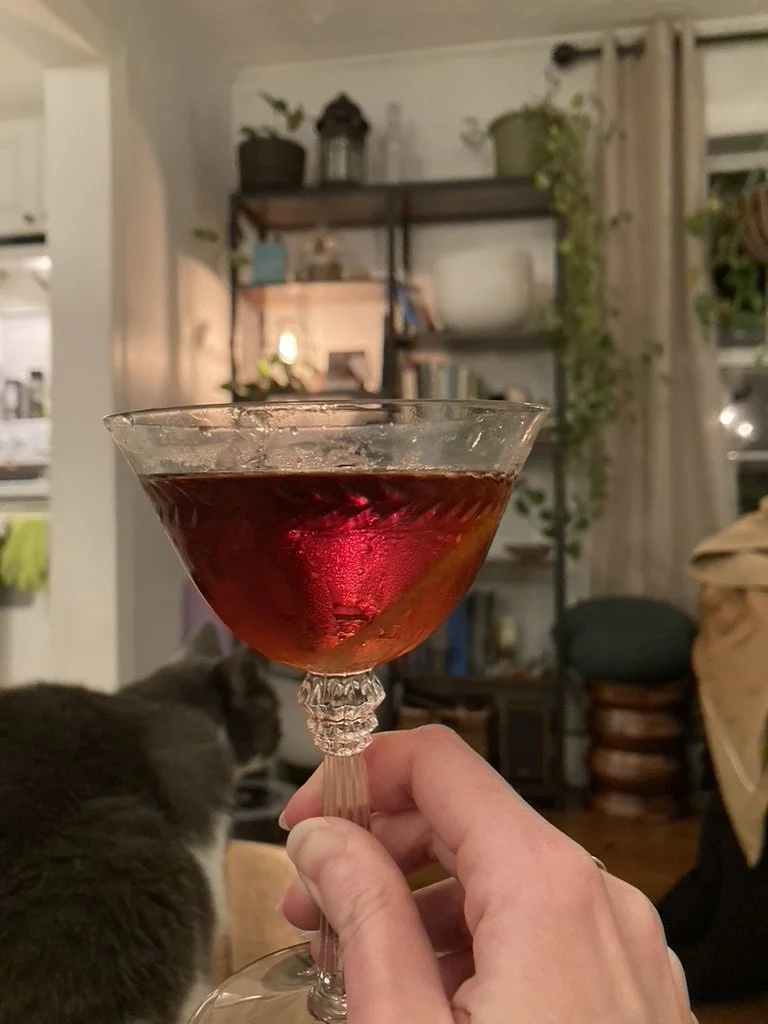
2 Ounces Brandy
1 Ounce Sweet Vermouth (I love Cocchi Storico Torino)
1/2 teaspoon simple syrup (I usually omit this)
2 -3 dashes bitters (I like to use a mix of orange bitters and Angostura)
Stir with ice & strain into a chilled cocktail or Nick & Nora glass. Add a luxardo cherry as a garnish.
I would love to hear what you savored in February, comment below. Cheers!